Bench vs OBD Key Programming Southlake: Two Ways Into a Car's Immobilizer, Explained
Bench programming vs OBD key programming explained for Southlake TX drivers — when a module must come out, what EEPROM work means, and what it costs. Call (972) 573-7978.
Bench vs OBD Key Programming Southlake: Two Ways Into a Car's Immobilizer, Explained
If you have ever collected quotes for a lost car key and wondered why one vehicle is a twenty-minute job while a nearly identical one costs twice as much and takes two hours, the answer is usually one word: bench. Some cars enroll keys through the diagnostic port; others require a module to come out of the car and give up its secrets on a workbench first. Knowing which category your car falls into explains almost everything about key pricing. Southlake TX Locksmiths does both, mobile, across Southlake, Colleyville, Keller, Grapevine, Westlake and Trophy Club. Call or text (972) 573-7978.
Quick Answer
OBD programming works through the car's diagnostic port: the tool talks to the immobilizer in place, the car grants a programming session, and the new key is enrolled. Fast, non-invasive, and the norm for most mainstream vehicles — especially when a working key exists.
Bench programming means physically accessing an immobilizer-related module — reading its memory (often called EEPROM work), extracting or preparing key data, then reinstalling. It exists because some manufacturers do not expose all-keys-lost functions through the port, and because some security generations require the module data directly.
Neither is better; they are tools for different locks. The skill is knowing which your car needs — before quoting, not after failing.
Programming Pricing by Path
| Service | Price Range |
|---|---|
| OBD key add (working key present) | $150–$400 |
| OBD all keys lost (supported platforms) | $250–$600 |
| Bench-assisted all keys lost | $400–$850 |
| Module removal, read + reinstall | $250–$600 |
| Failed-programming rescue (after another service) | Quoted after assessment |
Ranges only. The vehicle decides the path, and the path decides the price — we identify which from your VIN before quoting.
How OBD programming works
Every modern car has a diagnostic port, and for most, key enrollment is one of the functions offered through it. With a working key present, that key vouches for the session; the tool requests key-learn mode, the new key is presented, and the immobilizer adds it to its allow-list. On many platforms even all-keys-lost runs through the port, using secured procedures — sometimes with mandatory waiting periods the manufacturer built in as a theft deterrent.
The gateway era added a step: on newer vehicles, the tool must authenticate before the car will accept write commands at all. That is a separate topic we cover in our security gateway guide — but it changes who can program, not how the enrollment itself works.
How bench programming works
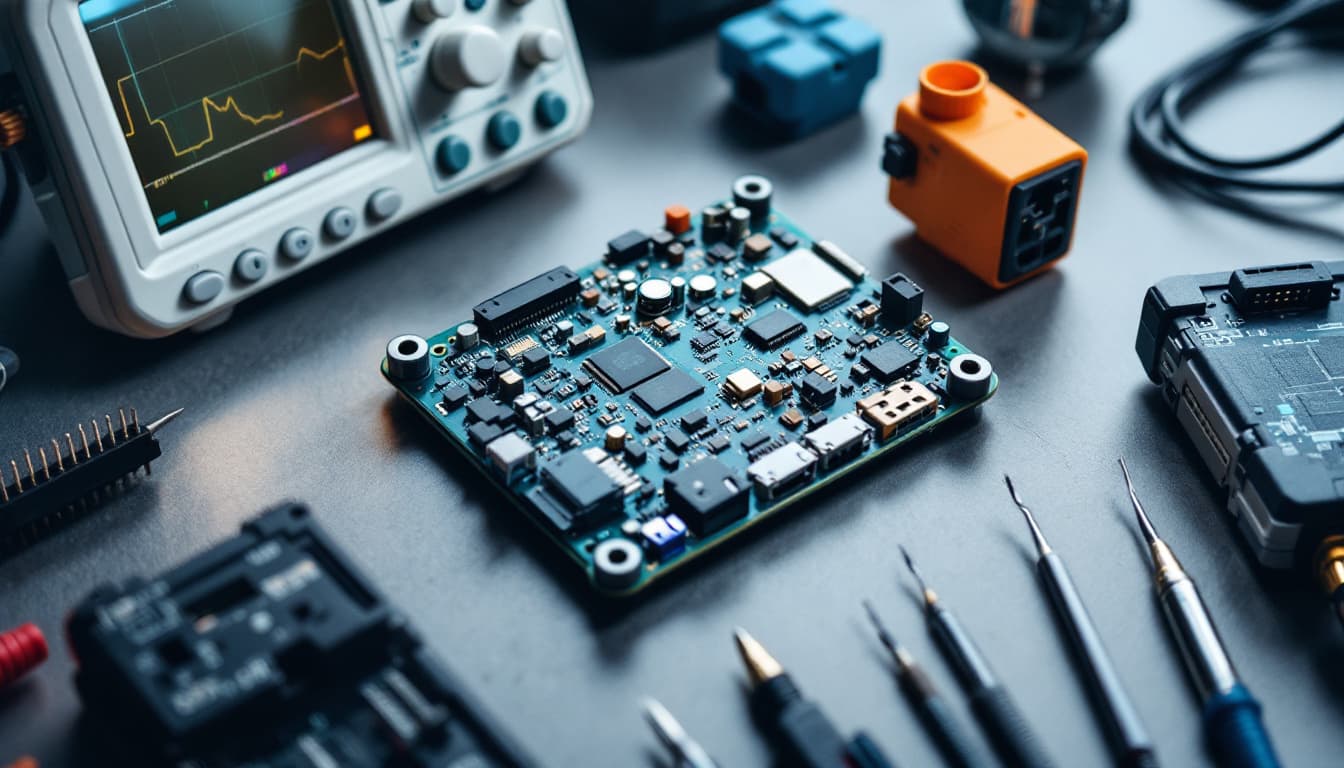
Some immobilizer designs simply do not offer a port-based path for the scenario at hand — most often all-keys-lost on European platforms. The key data lives encrypted inside a module: a BMW CAS or FEM, a Mercedes EIS, a VW group cluster or comfort module. To make a key, the module comes out and is read directly — its memory chip accessed on a bench, the key data recovered or the module prepared to accept new keys, then everything reinstalled.
This is precision work: fine-pitch electronics, chip-level reads, sometimes soldering. It is also completely recoverable, done properly — the module returns to the car functioning exactly as before, now with your new key enrolled. Our BMW CAS/FEM/BDC guide and Mercedes EIS guide both describe platforms where bench procedures are routine for lost-key work.
"Mobile" includes the bench
A common assumption: bench work must mean the car goes to a shop. In practice the bench comes to the car — the module is removed in your driveway, read at the vehicle, and reinstalled the same visit. The vehicle never moves, which is rather the point when it has no working key. For Southlake, Westlake and Trophy Club owners, that is the difference between an appointment at home and a flatbed to a dealership queue.
Why this split explains your quotes
The bench/OBD divide is the honest answer behind key-price mysteries:
Why is my neighbor's Camry key half the price of my 3 Series key? The Camry enrolls through the port; the BMW's all-keys-lost runs through module work. Different labor, different equipment, different price.
Why did the quote change when I said all keys are lost? With a working key, many cars stay in easy OBD territory; without one, some of those same cars shift to bench procedures. The scenario changes the path.
Why did an online service say yes and then fail at my car? Equipment that only speaks OBD hits a wall on bench-path vehicles. The connector fits every car; the capability does not. We take a steady stream of rescue calls that start exactly this way.
For the broader cost picture across scenarios, our ECU programming cost guide and car key replacement cost guide put numbers to the patterns.
Questions that reveal a capable service
Three questions sort key services quickly. Does your equipment cover my specific year and model for my specific scenario — checked against the VIN, not guessed? If the job needs module work, do you do it yourselves or subcontract it? And is the quote firm for the scenario described? A service that answers all three plainly is a service that has done your car before. Evasion on any of them predicts a truck that arrives and cannot finish.
Frequently Asked Questions
What is the difference between OBD and bench key programming?
OBD programming enrolls keys through the car's diagnostic port with the immobilizer in place. Bench programming removes an immobilizer module to read its memory directly — required on platforms that do not expose the needed functions through the port, most commonly European all-keys-lost scenarios.
Is bench programming safe for my car's modules?
Done professionally, yes — the module is read, the key data recovered, and the module reinstalled functioning exactly as before. The risk lives with inexperienced attempts: chip-level work punishes shortcuts, which is why it belongs with practiced hands.
Why does all-keys-lost cost more than adding a spare?
A working key vouches for the programming session, keeping most cars in fast OBD territory. With no key, several platforms require bench procedures — more labor, more equipment, more time. Same car, different scenario, different path.
Can bench programming be done mobile?
Yes — the module is removed at your location, read at the vehicle, and reinstalled the same visit. The car does not need to move, which matters most precisely when it cannot.
What is EEPROM work on a car?
EEPROM is the memory type inside many immobilizer modules where key data lives. EEPROM work means reading (and where needed, writing) that memory directly on the bench — the core skill behind bench key programming.
How do I know which path my car needs?
You do not need to — we do. Give us the year, make, model and scenario, and we will tell you the path and a firm price from the VIN before scheduling. If a car is genuinely dealer-only, we say that too.
Whether your car needs twenty minutes at the port or an hour at the bench, the job should be quoted correctly before anyone drives to you. Call or text (972) 573-7978 and Southlake TX Locksmiths will identify the right path for your vehicle — and finish it, at your location.
Written by the Southlake TX Locksmiths Automotive Locksmith Team — mobile automotive locksmith service across Southlake, Colleyville, Keller, Grapevine, Westlake and the DFW northeast.