Car Key Fob Programming Southlake TX: Rolling Code vs Smart Key Explained
Car key fob programming in Southlake TX — how rolling-code remotes and smart proximity keys differ, why one is cheap and one is not. Call (972) 573-7978.
Car Key Fob Programming Southlake TX: Rolling Code vs Smart Key Explained
Two customers call about "programming a key fob" and get quotes that differ by four hundred dollars. Neither is being misled — they own fundamentally different devices that happen to share a shape. One is a remote control that talks to a receiver. The other is a cryptographic credential the engine will not run without. Knowing which you have explains almost everything about price, time and whether a do-it-yourself procedure exists. Southlake TX Locksmiths programs both, mobile, across Southlake, Colleyville, Keller, Grapevine, Westlake and Trophy Club. Call or text (972) 573-7978.
Quick Answer
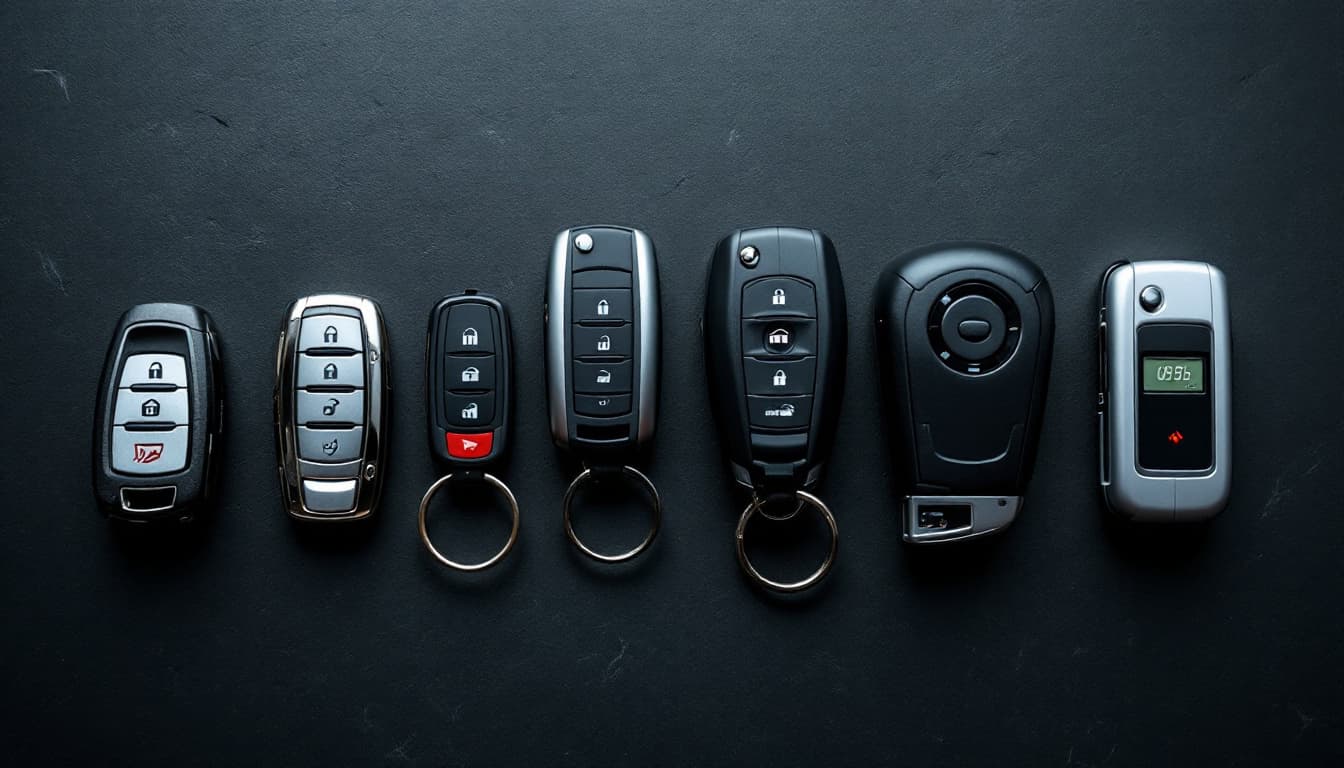
There are three generations of fob in circulation, and the difference is what the fob is allowed to do.
A fixed-code remote (mostly pre-1996) sent the same signal every time — obsolete and trivially copied. A rolling-code remote sends a different code on every press, synchronized with the car's receiver by a shared counter; it locks doors and pops the trunk but has nothing to do with starting the engine. A smart or proximity key carries an encrypted transponder credential that the immobilizer must authenticate before the engine will run, plus low-frequency communication so the car knows the key is inside the cabin.
Programming a rolling-code remote is often a short procedure and sometimes an owner-performed sequence. Programming a smart key requires authenticated access to the immobilizer, a diagnostic tool, and a correctly matched fob — which is where the cost lives.
Key Fob Programming Pricing
| Fob Type | What it controls | Price Range |
|---|---|---|
| Rolling-code remote only (no start function) | Locks, trunk, panic | $50–$140 |
| Remote head key with transponder | Locks + engine authorization | $120–$280 |
| Flip key with transponder | Locks + engine authorization | $130–$300 |
| Smart / proximity fob (spare, working key on hand) | Passive entry + push start | $200–$470 |
| Smart / proximity fob, all keys lost | Passive entry + push start | $300–$650 |
| Reprogramming after battery or sync loss | Restores pairing | $50–$120 |
Estimates only. Final pricing depends on year, model, fob generation and whether a working key exists. We confirm the total before starting.
Rolling code: a counter, not a secret
A rolling-code remote and the car's receiver both run the same algorithm from the same starting seed. Press the button and the fob advances its counter and transmits the resulting code. The car checks whether that code matches its own next expected value — or one of a window of upcoming values — and if so, acts, then advances its own counter to match.
That window exists for a practical reason: you press the button in your pocket, in the driveway, out of range. The fob advances; the car does not hear it. The window lets the car resynchronize when the fob eventually comes back in range, provided the drift is not extreme.
When drift is extreme — a fob pressed hundreds of times out of range, or a fob that sat with a dead battery for months — the counters fall outside the window and the remote stops working entirely even though nothing is broken. That is a resynchronization job, not a replacement, and it is one of the cheapest visits in this trade. People replace perfectly good fobs over it constantly.
Smart keys: authentication, not just transmission
A proximity fob does something categorically different. Instead of shouting a code, it participates in a challenge-and-response conversation. The car transmits a challenge; the fob computes an answer using a secret key it never reveals; the car verifies the answer. An observer capturing the exchange learns nothing reusable.
Two radio systems run in parallel. A low-frequency field, emitted by antennas placed around the cabin, is what lets the car determine whether the fob is inside or outside — that is how it knows to let you start rather than just unlock. A UHF link carries the response back. This is also why a fob with a dead battery can still start most cars when held against the button: the close-range transponder path is passive and needs no battery at all.
Because a smart key is a security credential rather than a remote control, adding one means writing a new authorized credential into the immobilizer. Manufacturers gate that deliberately. There is no owner-performed sequence for it on modern vehicles, and there should not be.
Why "just program the fob I bought online" often fails
Online fobs fail for four distinct reasons, and it is worth knowing which one you are risking.
It is already paired. Most smart fobs lock to the first vehicle they are written to. A used fob from another car is frequently unrecoverable — no tool can unlock it.
The frequency is wrong. Vehicles sold in different markets use different frequencies. A physically identical fob from the wrong region will never be heard.
The internal chip generation is wrong. Manufacturers change transponder families mid-model-run without changing the fob's external shape. The part looks right and cannot be programmed.
The blade is uncut. Even a working smart fob needs its emergency blade cut to your vehicle's lock code before it opens a door manually.
We are happy to tell you what to verify before you buy. Most people find that once the risk of a dead part is priced in, a supplied-and-programmed fob costs about the same. Our key fob types and programming cost guide is the detailed reference for identifying exactly what your vehicle takes.
The DIY procedures that do exist — and their limits
Some vehicles, mostly older domestic models with basic remotes, publish an owner sequence: turn the ignition through a set pattern, press a button on the remote, listen for a lock cycle. Where these work, they work, and there is no reason to pay for one.
Three caveats. They almost always require at least one already-working remote. They frequently erase every stored remote when run, so a second fob you left in a drawer will need reprogramming too. And they cover the remote functions only — no published owner sequence writes a transponder credential into a modern immobilizer.
If your car has push-button start, assume no DIY path exists.
When a fob that used to work suddenly stops
Before assuming a programming fault, work through the cheap causes in order.
Battery. Overwhelmingly the most common. A weak cell often produces reduced range first — the fob works at two feet but not twenty — which people misread as a pairing problem.
Water. A fob through the wash or a pool may work intermittently for weeks while corrosion spreads across the board. Our guide on how to fix a wet key fob covers what can actually be saved and what cannot.
Physical wear. Cracked solder joints from years of pocket flexing, or worn button contacts, produce a fob where some buttons work and others do not.
Counter drift, as described above — free to fix.
Interference. Dallas–Fort Worth has dense radio environments near some commercial buildings; a fob that fails in exactly one parking area and nowhere else is not broken. Our key fob not working walkthrough goes through the full sequence.
What programming actually involves on site
For a transponder or smart key, the work runs in a predictable order: verify ownership, confirm the exact key variant against the VIN, cut the mechanical blade or emergency blade to the factory code, connect to the vehicle, authenticate to the immobilizer, write the new credential, then test every function — lock, unlock, trunk, panic, and an actual engine start.
That last step matters more than it sounds. A fob that unlocks the doors but has not been correctly written to the immobilizer will strand you the first time you try to drive. If you want to understand why some vehicles allow this through the diagnostic port and others need the module opened, our bench versus OBD programming explainer covers it, and the VIN decoding guide shows how the correct variant is identified in the first place.
Frequently Asked Questions
How much does car key fob programming cost in Southlake TX?
A remote-only fob with no start function is typically $50 to $140. A transponder key runs $120 to $300, and a smart proximity fob $200 to $470 as a spare — more if all keys are lost. We confirm a firm total for your exact vehicle before starting.
Can I program a key fob myself?
Sometimes, for remote functions on older vehicles with a published owner sequence — and those usually need a working remote already and may erase your other fobs. There is no owner-performed procedure for writing a transponder credential on a modern push-to-start vehicle.
Why did my key fob stop working out of nowhere?
Most often the battery, or rolling-code counter drift from pressing the button repeatedly out of range. Water damage and worn button contacts are the next most common. Only after those are ruled out is reprogramming the answer.
Will a fob bought online work on my car?
Sometimes. The common failures are a fob already locked to another vehicle, the wrong regional frequency, the wrong internal chip generation, or an uncut emergency blade. Tell us the part you are considering and we will tell you what to verify first.
What is the difference between a rolling code remote and a smart key?
A rolling-code remote only operates locks and the trunk — it has no role in starting the engine. A smart key carries an encrypted credential the immobilizer must authenticate before the engine will run, plus low-frequency communication so the car knows the key is inside.
How long does key fob programming take?
A remote-only fob is often 15 to 30 minutes. A transponder or smart key with a working key on hand typically runs 25 to 50 minutes, including cutting the blade and testing every function. All-keys-lost jobs take longer.
Need a fob programmed today? Call or text Southlake TX Locksmiths at (972) 573-7978 with your year, make and model. We identify the correct fob generation, quote a firm total and program on site. Mobile service across Southlake 76092, Colleyville, Keller, Grapevine, Westlake and Trophy Club.
Written by the Southlaketxlocksmiths Automotive Locksmith Team — mobile automotive key cutting, programming and ignition service across Southlake and northeast Tarrant County.